

Any serious homesteader or market gardener will quickly see the value offered by a wide variety of push and tractor-mounted seeders. These seeders save us back-pain and time, while also encouraging a more systematic approach to gardening. If gardening on any plot of 1000 square feet or more, a seeder is essential, and fortunately there is an option for virtually every budget (except the “it’s free” category, unless you happen across one by chance). Here are five diverse choices for seeders, including simple push seeders and options for tractor-mounted seeders for those looking for some serious mechanization.
While I’ve put a number of links in the below list where you can purchase these items, none of them are affiliate links, and I don’t make any money off you viewing or purchasing these items. I just hope the information is helpful. If so, follow our site by subscribing to the email list.
1. EarthWay
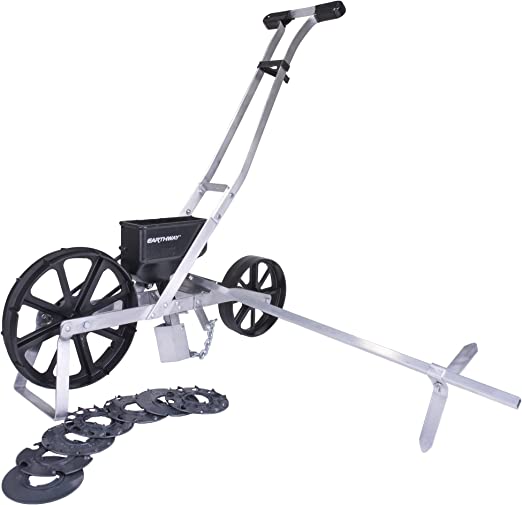
The EarthWay 1001-B seeder is a great tool for start and may serve the homesteader or market gardener well for many years. Many growing projects of an acre or less may never need anything more than the EarthWay. The pros of this indispensable tool include a very simple aluminum frame construction, ease of assembly, light weight, and wide variety of included seed plates. This is the seeder I personally use and have found the best success in well-tilled soil. The EarthWay does not excel in rougher soils, which can cause the light seeder to bounce, throwing seed out and causing skips in planting. Keeping a slight tilt on the EarthWay is also helpful, especially when there is a low seed count in the hopper. The downsides of the EarthWay, besides its challenges in rougher soils, include its plastic parts, mostly the wheels, hopper, and seed plates. Nonetheless, the EarthWay should operate well for many years if stored properly and kept out of harm’s way. The best thing about the EarthWay is its reasonable price tag in comparison to other seeders.
The EarthWay can be bought from either Amazon or Johnny’s Selected Seeds.
2. Chapin
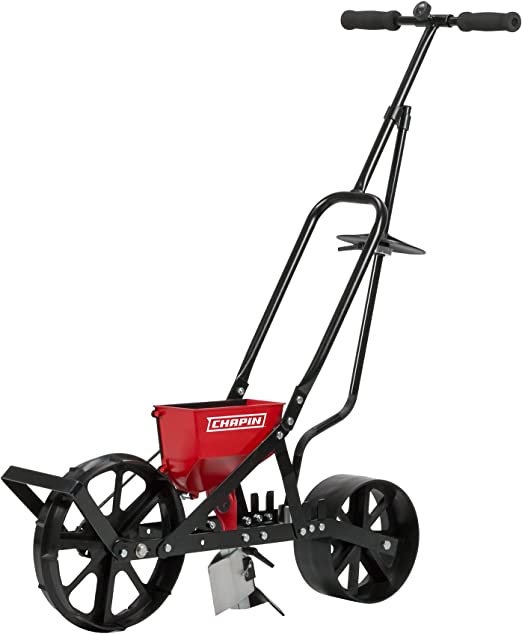
The Chapin 8701B seeder is another great seeder for most people. Though I see fewer homesteaders and market gardeners talking about the Chapin vs. the EarthWay, the tool is nearly identical in its pros (including an even cheaper price than the EarthWay) and its cons. Though market gardeners will find both these budget push seeders to be a bit less sturdy than they’d like, they will serve as a fine starting point when trying to keep costs low.
3. Jang JP & TD Series

The Jang is probably the gold standard when it comes to push seeders. While they are known for their precision and wide variety of available seed rollers, they do carry a price tag about four times higher than the Earthway. That said, Jangs are much sturdier than their economical cousins, carrying a lot more metal than plastic for added weight, which helps in firming the bed and increasing seed-to-soil contact.
There isn’t just one Jang either, but a whole line of Jang seeders. The JP series is primarily geared towards smaller seed vegetables, while TD series is for larger seeds, like corn and beans.
The serious homesteader or market gardener may even purchase multi-row Jangs (e.g. four or six rows per pass) and tractor-mount version (e.g. the JPH-U). The six-row Jang seeder can also be mounted to a tractor via a hitch kit. Just keep in mind that while a multi-row seeder can save time, they require pristine bed preparation.
4. Cole Seeders
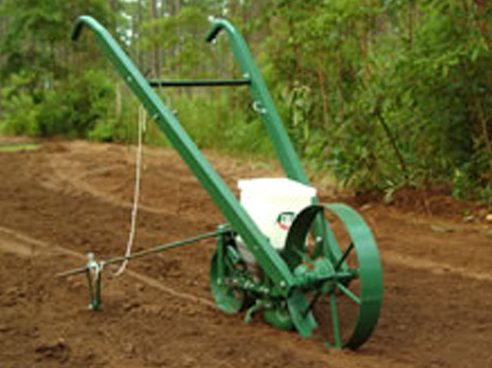
Cole makes the well-known Planet Jr. push seeder. Though it commands the highest price in the push seeder market, it is by far the sturdiest one available, having lots of cast iron (and weight). Moreover, the Cole seeders are truly made in America in our home state of Georgia. Unlike some of the other push seeders, the Planet Jr.’s ability to be mounted on a tractor toolbar doesn’t appear as an afterthought, too.
5. FieldTuff 60″, 3-Point Seeder
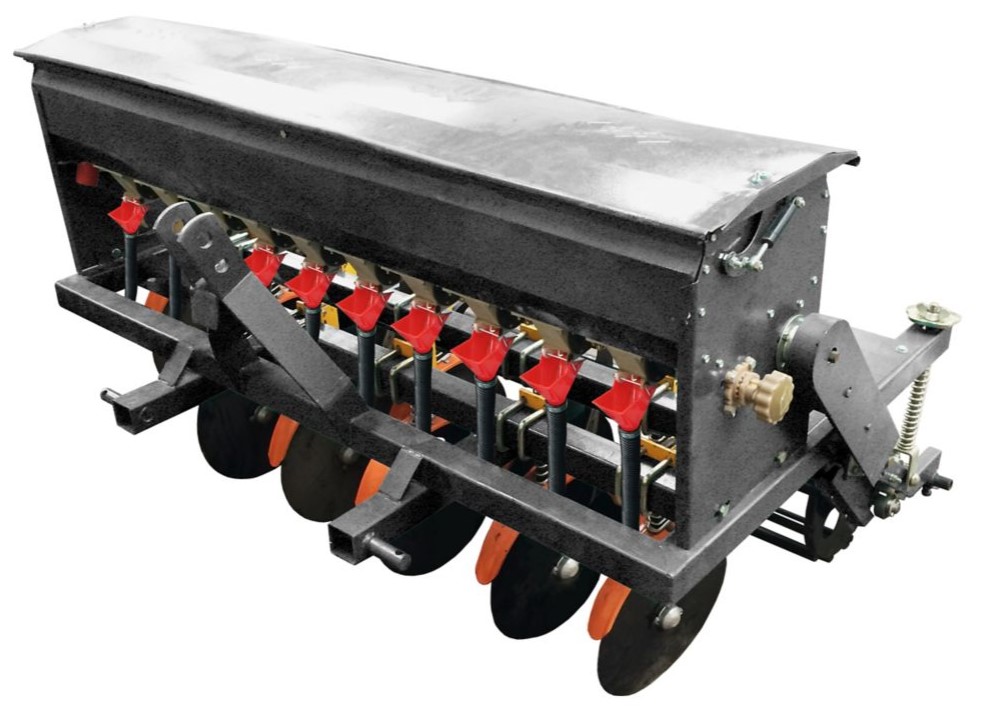
For the very serious homesteader or market gardener, FieldTuff makes a seeder more in line with tractor-mounted grain drills. While the FieldTuff 60″ seeder might be best suited for wildlife food plots, it appears to be a capable seeder. The major negatives of it arethe investment at several thousand dollars and some relatively cheap-looking plastic parts for the seed handling. Another downside is the relative complexity of a machine of this caliber, which I interpret as possibly requiring more maintenance and repair down the line.
In my opinion, mounting the more traditional push seeders on a tractor is probably the way to go, but this could certainly seed the fastest for large properties.
Other Seeders
There are a large variety of seeder types not represented by those above. These include jab seeders, a six-row seeder, and pinpoint seeders – all of which I feel are a bit niche in comparison to the EarthWay, Chapin, Jang, and Cole seeders. Nonetheless, they do serve important roles in some instances. For example, the jab seeders can seed through weed fabric.
Summary
Homesteaders and market gardeners are blessed today with a variety of seeding tools to fit their needs, ethos, and work preferences. If, after researching all the options, you still don’t know which seeder you should get, I’ll just recommend the EarthWay for you. It’s largely tried and true, carries a low price tag, and can plant most of the common vegetables you’ll want. I currently use the EarthWay, though my plans for greatly expanding our production have me eyeing the multi-row Jang seeders, especially those mountable on a compact tractor.
Never stop growing,
Christian
 Born for the Barn
One thought on “The Best Seeders for Homesteads and Market Gardens”