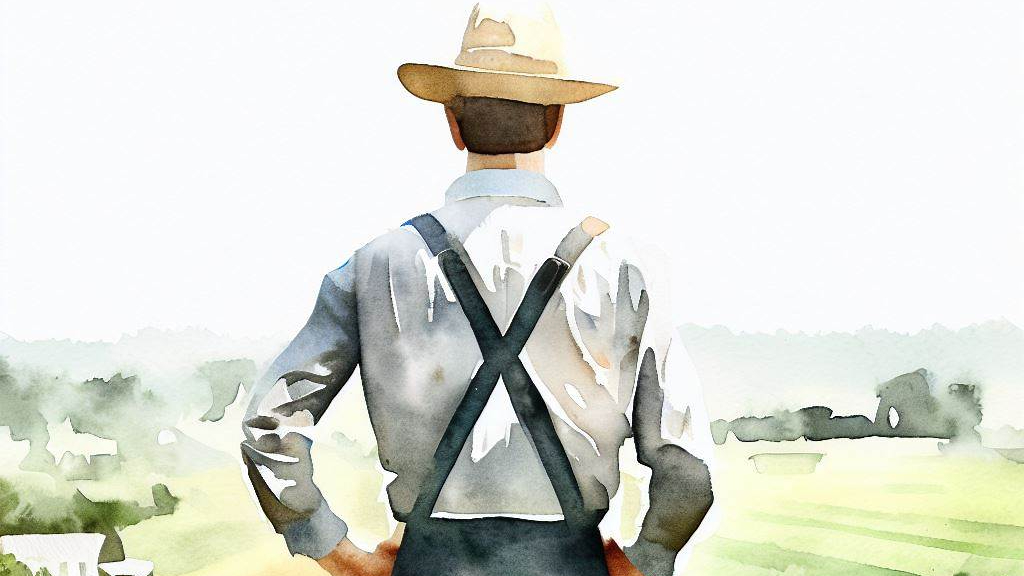
The idea of quitting my day job and turning the homestead into a for-profit farm is an alluring idea. In sum, what I can’t help but contemplate regularly is whether I really want to be a homesteader or a farmer, a grower for my family or for the larger community. While the idea of ditching the office desk for the joy and difficulty of laboring outdoors sounds (to me) like a welcome change, I can’t help but consider the realistic implications of such a change. Let’s remind ourselves of some of those realities.
1. Show Me the Money
The first thing anyone will think of, if seriously considering beginning a farm, is the financial prospects. It’s no secret that the potential profit of a small farm is meagre at best. In fact, before you can even think of how much profit will be made, one must first (unfortunately) consider first whether any profit will be made. A majority of small farms in the United States do not make significant income, and I suspect (as must be the case?) that such small farms are supplemented with off-farm income, usually from a spouse. For our family, there’s zero chance my wife will be working significantly for many years to come, so a full-time farm that still requires off-farm income is not an appealing idea.
Even if the farm is profitable and earns an income large enough to support a family, there is always the problem of the “golden handcuffs”. I don’t doubt my current salary is much higher than what a small, full-time farmer is making. The idea of cutting my salary by a factor of two (or three…or more in the first few years especially) is scary. I am blessed to make a good income with my day job as an engineer – a salary which allows me in invest in the tools I use around the homestead. If I didn’t have a family of six to support, making the leap to farming would probably be easier. Lastly, I want to stress what a first-world complaint this is and just how mixed I feel about it: imagine complaining about having too good of a job, one that pays well, has great vacation time, and allows me to work from home most of the week.
2. Retirement
Another thing I worry about when considering a jump to full-time farming is that I will get old, meaning I won’t always be able to do the physical labor that I can now. At some point, I would like to retire, at least in part. I love being outside with animals and in the garden, but I won’t always have the vigor to work a profitable farm, and so will require some savings for a decently comfortable retirement. That retirement is virtually guaranteed with my current job. With an already meagre income expected from a full-time farm job, I don’t expect I’d be able to save hardly anything for retirement. Most farmers seem to store their wealth in their land, but on a small property of only a little over six acres (even if intensively farmed in the methods of Fortier, Stone, Coleman, etc.), only a limited amount of wealth can be had from it later on. It’s also not a large enough property to be multigenerational. If one of my kids were to want to take over this hypothetical farm 30 years from now, there’s just not much space for a second home in addition to the land needed for farm activities. Full-time farming seems to require more land from this aspect alone.
3. Wealth for my Children
Lastly, I worry a move to farming, while offering the best childhood imaginable for my kids, will limit what I can pass on to them later on. My parents worked hard their whole lives to find a comfortable excess of money in their current retirement. They are not rich, but live comfortably enough to travel, indulge in a few “wants” every year, and will inevitably pass what remains to my brothers and me. I can achieve the same with my current employment for my kids, helping them pay off their mortgages when I pass away. I farm income, however, will likely leave nothing to pass on except the land being farm, as I’ve already mentioned. Therefore, I’ll be giving less to my kids than my parents gave to me – something I do not like to consider. Would my choice to farm be selfish in the end, as I limit what my kids may be able to do? Does a farm-life childhood make up for that? I don’t know, but I’d be curious what you readers think on this matter.
Conclusions
As is apparent, most of my apprehensions about whether to farm or not come down to financial aspects. Perhaps that’s no surprise, as all dream of a farm life, but few touch it with a ten foot pole because of the meager income. Beyond the income of a farm, the long-term financials can’t be forgotten. Once upon a time, children took care of their parents in old age, but it appears that idea hasn’t stuck in the minds of the culture today, at least in the U.S. Further, kids rarely follow the career of their father nowadays, making legacy businesses rare. Those legacy businesses were a solid foundation which a family – both old and young – could count upon. The loss of the family business culture leads to an “every man for himself” culture instead, meaning each new family has to figure out a new career or businesses every generation: sounds inefficient! This in turn, means leaning on banks for loans, off-farm jobs, and two working parents for many farms today.
One of these days I’ll buck up the courage and gamble on a farming venture. My biggest fear is finding myself at the end of my life, realizing I never tried.

